.png)







The impact of AI & cybersecurity talent shortages on salaries
According to a recent IBM study, a single cyber attack can cost a company $6 million in damages, yet there aren’t enough cybersecurity experts to meet the increased demand for security. A McKinsey Global survey reveals that 87% of companies either face skill shortages today or anticipate them soon. Meanwhile, the AI industry is booming at a staggering $244 billion with 27% CAGR according to Statista, yet, 44% of executives cited a lack of in-house AI expertise as a key barrier to implementing generative AI (Bain study).
As technological change accelerates, businesses are racing to adopt advanced tools and platforms. But the workforce isn’t keeping pace. The availability of talent with the right technical skills is lagging.
In this article, we will explore the talent gap for the most in-demand tech skills, AI and cybersecurity, along with their impact on salaries.
Talent shortage index
As per our research backed by LinkedIn Talent Insights, job postings seeking out artificial intelligence skills and cybersecurity skills have increased at 81% and 33% respectively in 2024-2025, whilst its talent shortage index has also been quite high, indicating a wider gap.

AI talent shortage
The demand for AI talent is outpacing the supply globally. Emerging economies such as the Philippines and Mexico exhibit the highest AI talent shortage. Interestingly, advanced economies like the United States, the United Kingdom, and Germany reflect more moderate shortage levels. However, this does not necessarily mean these markets are immune to AI hiring challenges.
Rather, they benefit from deeper existing talent pools and more established training pipelines, which can temporarily mask deficits, especially in highly specialised roles such as generative AI, machine learning operations, and AI ethics.
The global AI talent shortage is no longer a future risk; it's a present reality, with demand outpacing supply in over 70% of the countries analysed.
Cybersecurity talent shortage
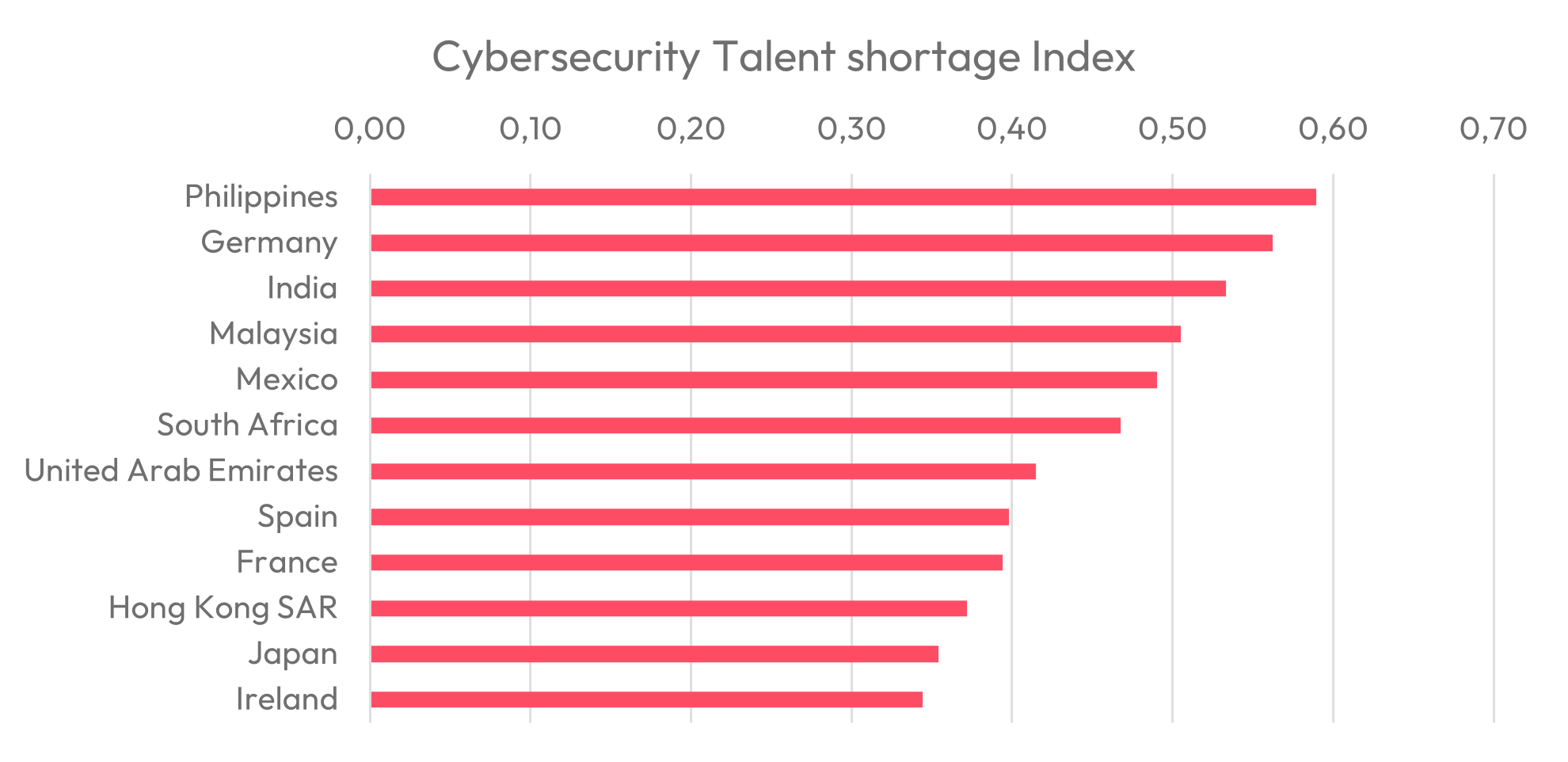
Cybersecurity is key to digital resilience, but the demand for cybersecurity experts is higher than the supply worldwide. The talent shortage index reveals that countries like the Philippines, Germany, India, and Indonesia are facing the steepest shortages. This shows a growing need, especially in fast-developing digital economies where cybersecurity is also developing.
Industries like banking, telecom, and government are investing more in cybersecurity. However, the number of skilled professionals is not growing fast enough, which causes hiring delays, higher salary demands, and more dependence on external vendors. Even advanced economies like the United States and the United Kingdom still struggle with shortages in key areas such as threat intelligence, cloud security, and identity management, despite being mature in cybersecurity.
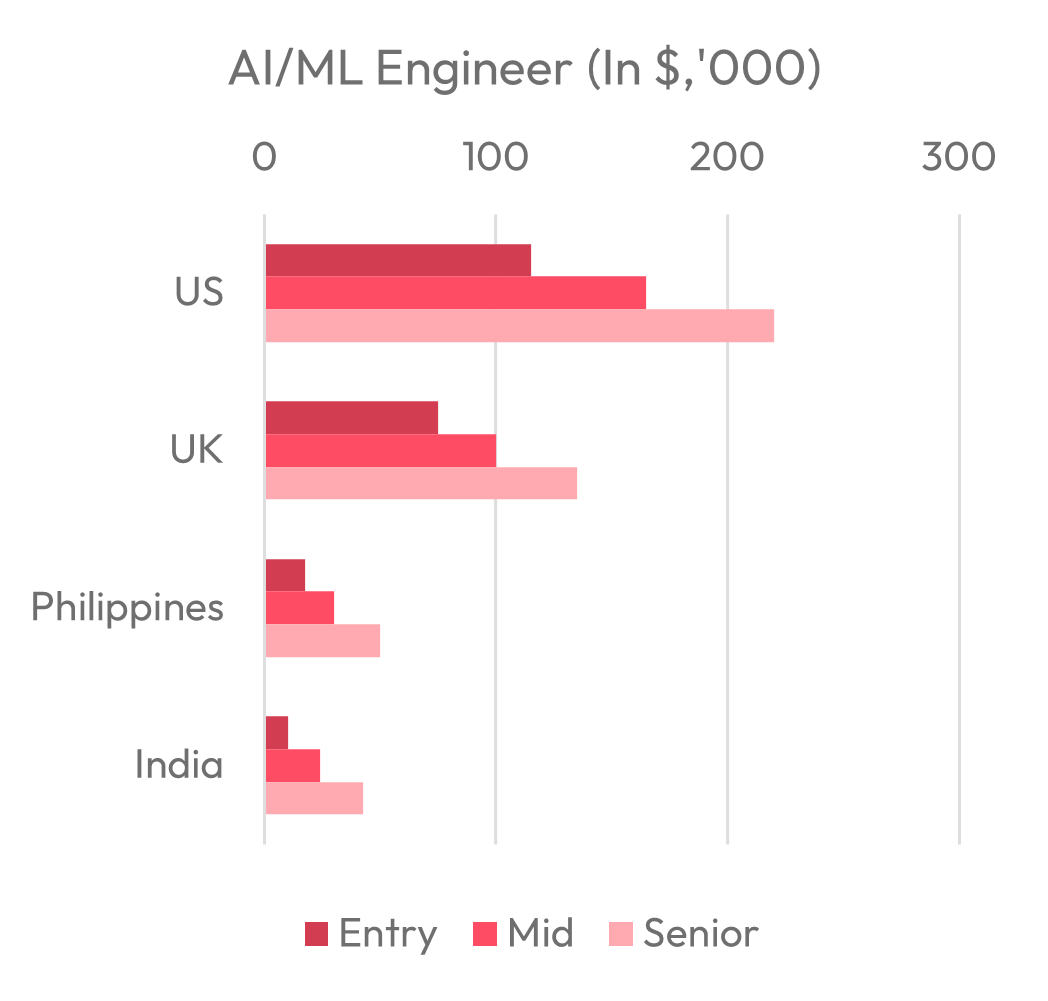
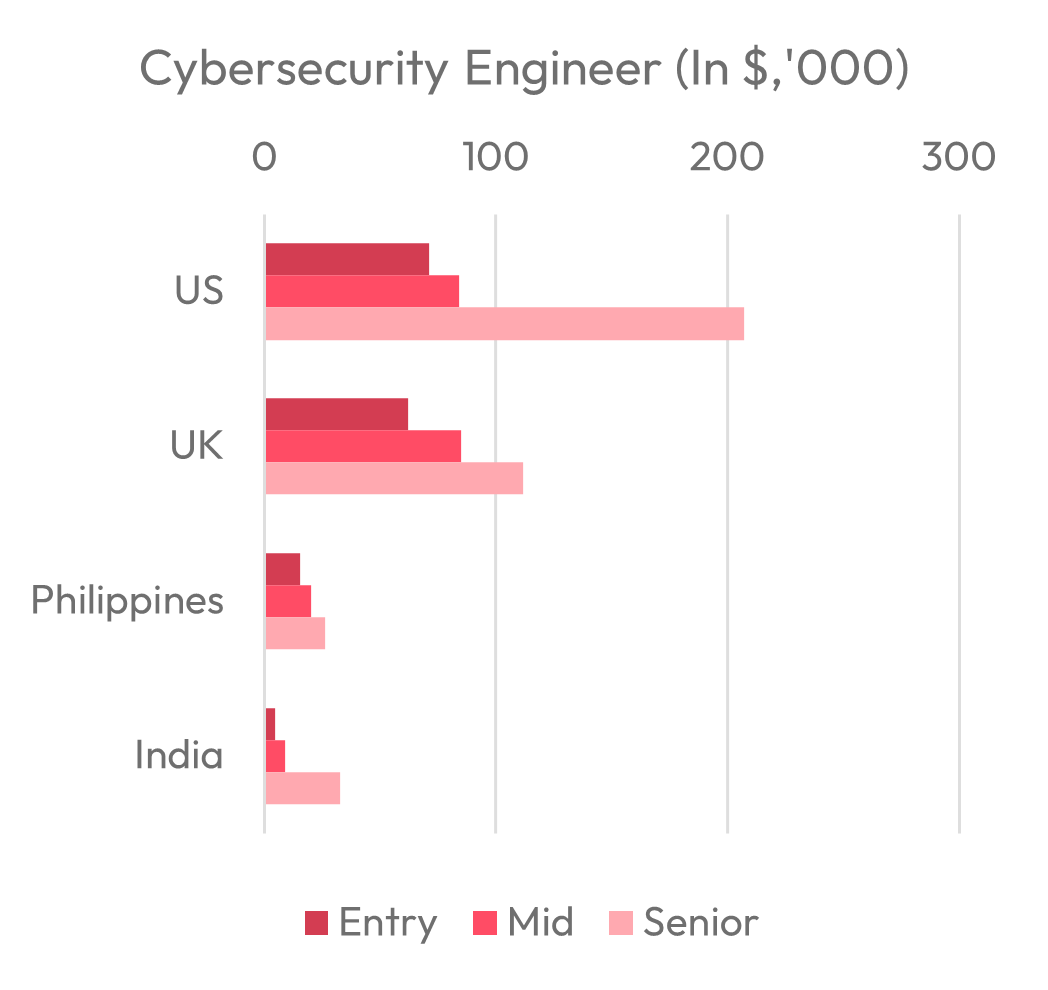
Salary Analysis: AI/ML engineers and cybersecurity engineers across various markets
One result of the AI/cyber talent shortage is rising pay. Skilled AI/ML/cyber professionals earn high salaries and good benefits as companies compete for a small number of experts.
Pay differences by region
Source: Job boards
Professionals with in-demand AI or cyber skills earn 20-30% more when compared to those similar roles for professionals withour these skills, although this percentage may vary based on experience, industry, and location.
Tap into a global talent pool for cost and productivity
These are the top ways to reduce talent cost and hire effectively:
1. Offshoring
Setting up offshore/Global Capability Centres (GCCs): In high-supply markets such as Poland, India, the Philippines and Mexico, there is increased access to tech talent and poentially lower costs. Our team provides support through our offshoring talent solutions, helping businesses expand to a location based on their talent and growth needs.
2. Skills-based hiring
Skills-based hiring has emerged as a transformative recruitment approach, with LinkedIn research showing that talent pools can increase by 19 times when using skills-first hiring practices. This approach prioritises competencies over credentials, expanding access to diverse talent.
3. Hiring a contingent workforce
According to the JIER APAC Contingent Workforce Report 2024, nearly 50% of organisations in the Asia Pacific use contingent labour to address staffing shortages, and approximately 25% plan to increase their use of contingent workforce solutions.
Deloitte’s 2023 Workforce Globalisation report found that 62% of global employers plan to scale operations in emerging tech hubs to combat skill shortages.
Access data-driven recruitment
To address current and future talent shortages in tech in general and maintain a competitive edge, a specialised end-to-end recruitment provider is essential. Robert Walters offers best-in-class, data-driven insights into skills adjacencies, enabling strategic workforce planning. Additionally, this approach equips employers with recruitment strategies, upskilling plans, and solutions for challenges within the hiring cycle, particularly with in-demand skills.
Related content
View All
Given a complex labour market and talent landscape, industry-specific compensation and benefits benchmarking is crucial to attract and retain top talent. At its core, compensation benchmarking is the process of comparing an organisation’s pay practices against external market data to ensure competit
Read More
In today’s competitive labour market, organisations cannot afford to have hiring decisions be driven solely by vacancies. While recruitment is essential in securing talent quickly, long-term performance depends on a more structured approach: proactive talent planning. The current problem isn’t that
Read More
2026 is shaping up to be an interesting year for salary developments and compensation structures. While European member states are preparing for the EU Pay Directive to ensure more equitable pay, other parts of the globe are also noting considerable changes in salary growth over time. Inflation is c
Read MoreFAQs
-
Why is there a shortage of cybersecurity and AI talent?
The shortage is driven by the growth of digital technologies and the increasing complexity of cyber threats, which demand highly specialised skills. Educational institutions and training programmes haven’t kept pace with industry needs, leaving a gap between demand and supply. Additionally, AI and cybersecurity professionals are in high demand across sectors creating fierce competition and often resulting in premium salaries for these skills. Retaining talent is also a challenge, as skilled individuals often receive competitive job offers making it harder to hold onto employees with these skills. -
How does the talent gap impact organisations?
The shortage of AI and cybersecurity professionals leaves organisations vulnerable to threats and slows digital transformation. In cybersecurity, lean teams may struggle to monitor systems, respond to breaches, or implement proactive defenses. In AI, limited talent can delay innovation and tech adoption. The gap also drives up hiring costs and increases reliance on external consultants, making it harder for companies to build resilient, in-house capabilities that support long-term growth, innovation, and security. Ultimately, the lack of supply means many companies are competing for the same talent. -
Does Robert Walters offer AI solutions?
Robert Walters Talent Advisory offers an AI Readiness Masterclass aimed at upskilling HR & TA teams to implement AI in a responsible, ethical, and effective way that has a real impact on their daily operations. The programme cost covers 4 participants from your people teams to engage in 5, 1-to-1 sessions with a member from our expert Future of Work team. It also includes 1 AI update session to provide information on any key updates you should know about.